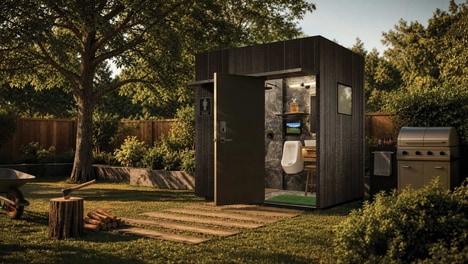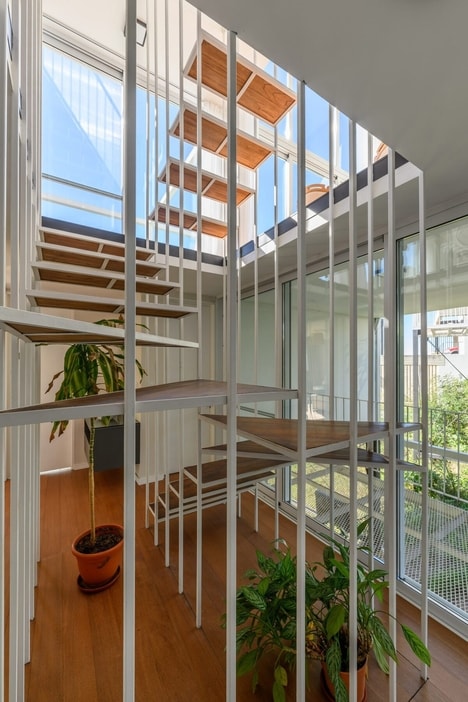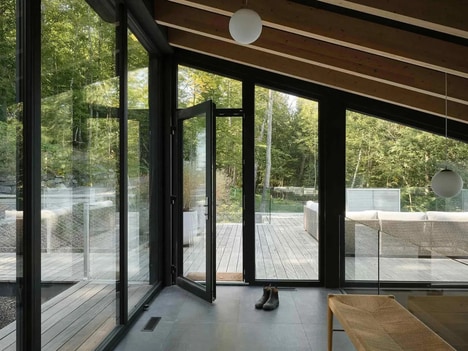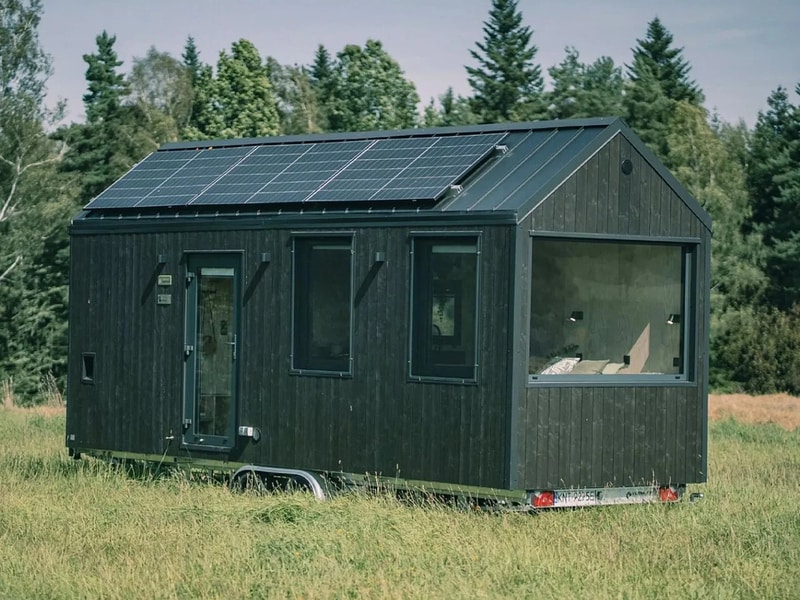
The Felicia tiny house is a compact dwelling created by Vagabond Haven and built on a double-axle lightweight trailer. Measuring 7.2 metres long, 2.5 metres wide, and 3.94 metres tall, the structure has a maximum weight of 3.5 tonnes. Exterior cladding options include spruce, ThermoWood, oxygen wood, and Shou sugi ban, while insulated two-pane windows and a tempered glass entrance door provide natural light throughout the interior. The single-level layout uses spruce or plywood finishes on the walls and ceilings alongside laminate flooring.
The home includes a kitchen equipped with a two-burner propane stove, compact refrigerator, sink, and cabinetry. A bathroom contains a glass-enclosed shower, vanity sink, and a choice of flushing, composting, or incinerating toilet. Optional off-grid equipment includes a solar power system, rainwater harvesting setup, water tank, and water pump. Ventilation is provided through the living area, kitchen, and bathroom with a recuperator.
Image Credit: Vagabond Haven
Why This Trend Is Growing
- Off-grid Micro-living
- Compact homes with solar power, rainwater harvesting, and alternative toilets create new potential for self-sufficient retreats in remote and low-infrastructure locations.
- Mobile Hospitality Units
- Trailer-based tiny houses expand lodging models by blending relocatable accommodations with the comfort and privacy of standalone cabins.
- Minimalist Wellness Escapes
- Small-format dwellings with natural materials and efficient layouts align with demand for simplified stays centered on quiet, nature, and reduced consumption.
Industries Being Reshaped
- Travel and Hospitality
- Retreat operators can diversify accommodations through compact, off-grid-ready units that reduce site development requirements and support flexible destination planning.
- Residential Construction
- Modular tiny homes introduce scalable alternatives to conventional housing by combining lightweight structures, efficient interiors, and customizable utility systems.
- Sustainable Technology
- Integrated solar, water collection, ventilation, and waste solutions position micro-dwellings as practical testbeds for decentralized infrastructure innovation.