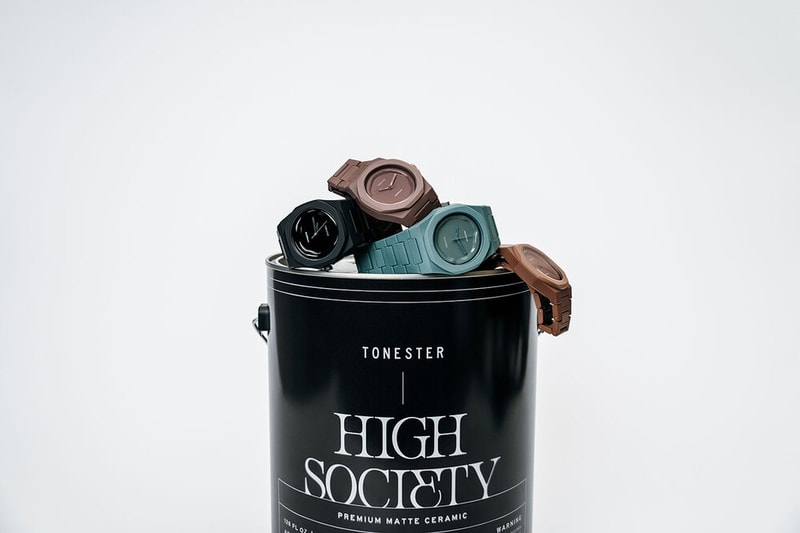
The Tonester x D1 Milano watch collection explores how architectural color can shift from spatial environments to wearable objects. Created by paint brand Tonester and Italian watchmaker D1 Milano, the limited-edition series translates tones first presented during Milan Design Week 2025 into monochromatic wristwatches. Each model uses a single saturated hue across the case, dial, and strap, turning the watch into a study of pigment rather than a traditionally decorated accessory.
Four colorways anchor the collection, each referencing aspects of Milan’s visual and cultural landscape. “Love & Sins” appears in a velvety jade green inspired by historic façades, while “Street Art” uses deep mocha tones reminiscent of espresso bars and leather interiors. “Evening Galore” arrives in a dark umber-black that reflects Milanese elegance, and “Cursed by Milano” presents a rich oxblood red associated with the city’s design heritage.
Image Credit: Tonester, D1 Milano
Why This Trend Is Growing
- Architectural Color Translation
- Translating urban and historical façades into product colorways creates new pathways for storytelling-driven design differentiation across physical goods.
- Monochrome Productization
- Products unified by a single saturated hue shift the focus from ornament to pigment study, opening room for materials and finishing innovations that alter perception through color alone.
- Designer-brand Collaborations
- Limited-edition partnerships that marry specialist knowledge with mainstream manufacturing generate collectible scarcity models that redefine value and consumer engagement.
Industries Being Reshaped
- Watchmaking
- Heritage and independent watch brands adopting architectural color narratives introduce premium differentiation opportunities tied to provenance and cultural reference.
- Paints and Coatings
- Color houses expanding into product-led color licensing create new revenue streams by turning curated pigments into experiential consumer goods.
- Fashion and Accessories
- Accessory designers leveraging single-hue studies establish minimalist product lines that emphasize materiality and finish as primary points of innovation.