





Tory Burch Fall 2026 RTW Capsule Explores History and Utility
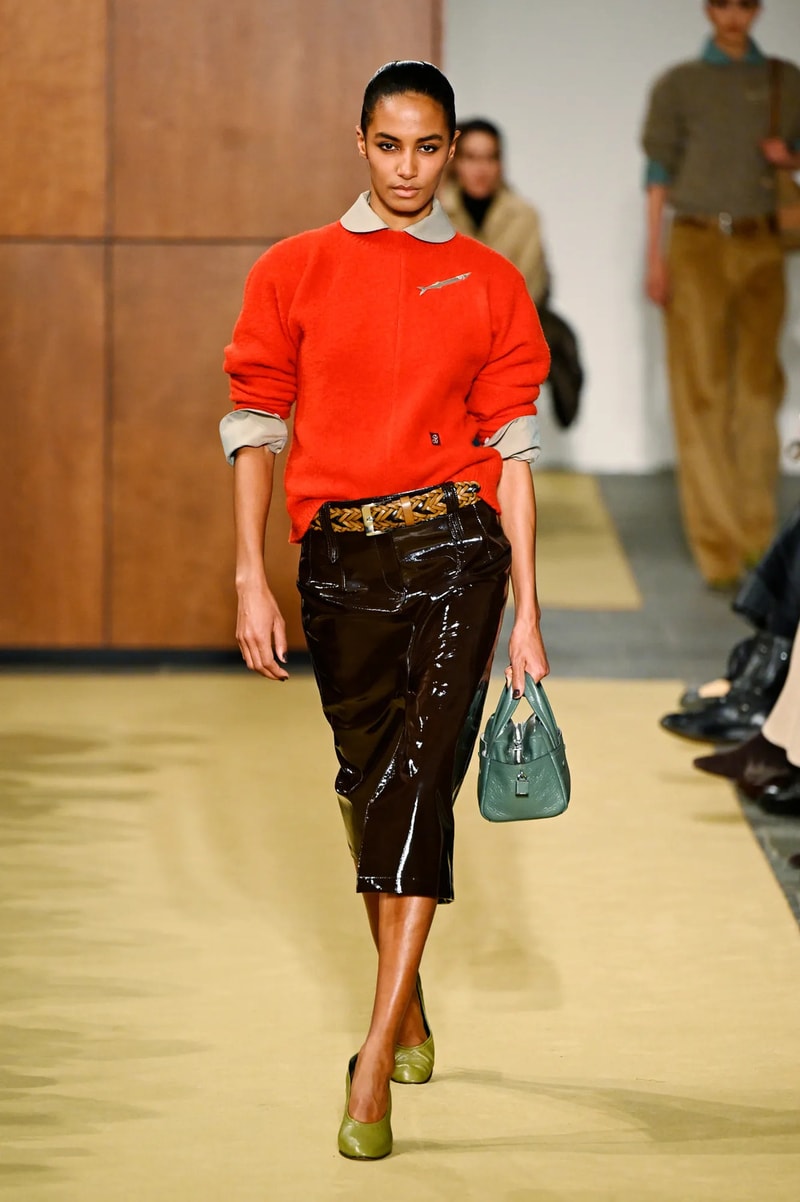
The Tory Burch Fall 2026 Ready-to-Wear collection was presented as an exploration of enduring archetypes that the designer reinterpreted through technique, proportion, and the juxtaposition of seemingly disparate elements. The creative process began with clothing shaped by history and utility, with each silhouette reinterpreted by a contemporary lens — from the peacoat being transformed with longer proportions, softer sleeves, and gold embroidered buttons to the Shetland crewneck featuring raffia embroidery in place of traditional intarsia, and the Henley reimagined as a fine-gauge sheer knit with covered buttons.
The deliberate contrast between traditional spring and summer elements against winter-coded pieces — most notably the hand-done badla embroidery by Indian artisans on felted wool knits — creates visual interest and textural complexity that appeals to fashion enthusiasts who appreciate craftsmanship and unexpected combinations.
Image Credit: Giovanni Giannoni/WWD
The deliberate contrast between traditional spring and summer elements against winter-coded pieces — most notably the hand-done badla embroidery by Indian artisans on felted wool knits — creates visual interest and textural complexity that appeals to fashion enthusiasts who appreciate craftsmanship and unexpected combinations.
Image Credit: Giovanni Giannoni/WWD
Trend Themes
1. Technique-forward Heritage Rework - A resurgence in reinterpreting historical garments through advanced tailoring and finishing techniques opens avenues for hybrid products that blend archival silhouettes with contemporary production methods.
2. Mixed-season Layering - Contrasting spring and winter elements within single looks highlights demand for versatile garments engineered to perform across climates and occasions, suggesting new modular or multi-function apparel concepts.
3. Artisan-integrated Embroidery - Handmade embellishments like badla and raffia embroidery embedded into machine-produced knitwear indicate potential for platforms that scale artisanal craft while preserving provenance and unique textural value.
Industry Implications
1. Fashion Retail - Premium retailers can capitalize on consumer appetite for narrative-driven pieces by curating capsule collections that foreground technique and provenance alongside storytelling commerce models.
2. Textiles and Materials - Innovation in hybrid fabrics and surface treatments could emerge to reconcile delicate handwork with durable, climate-adaptive performance in ready-to-wear lines.
3. Luxury Manufacturing - Production ecosystems that integrate skilled artisanal labor with precision machinery may enable scalable bespoke features and higher-margin limited editions for the luxury market.
9.3
Score
Popularity
Activity
Freshness